
In Sanur, faith is part of everyday life. You will see small offerings on doorsteps and pavements every morning, ceremonies at the neighbourhood temple, and processions on the road to the beach. A few simple habits help you show respect, and they are appreciated.
Canang sari: the daily offerings
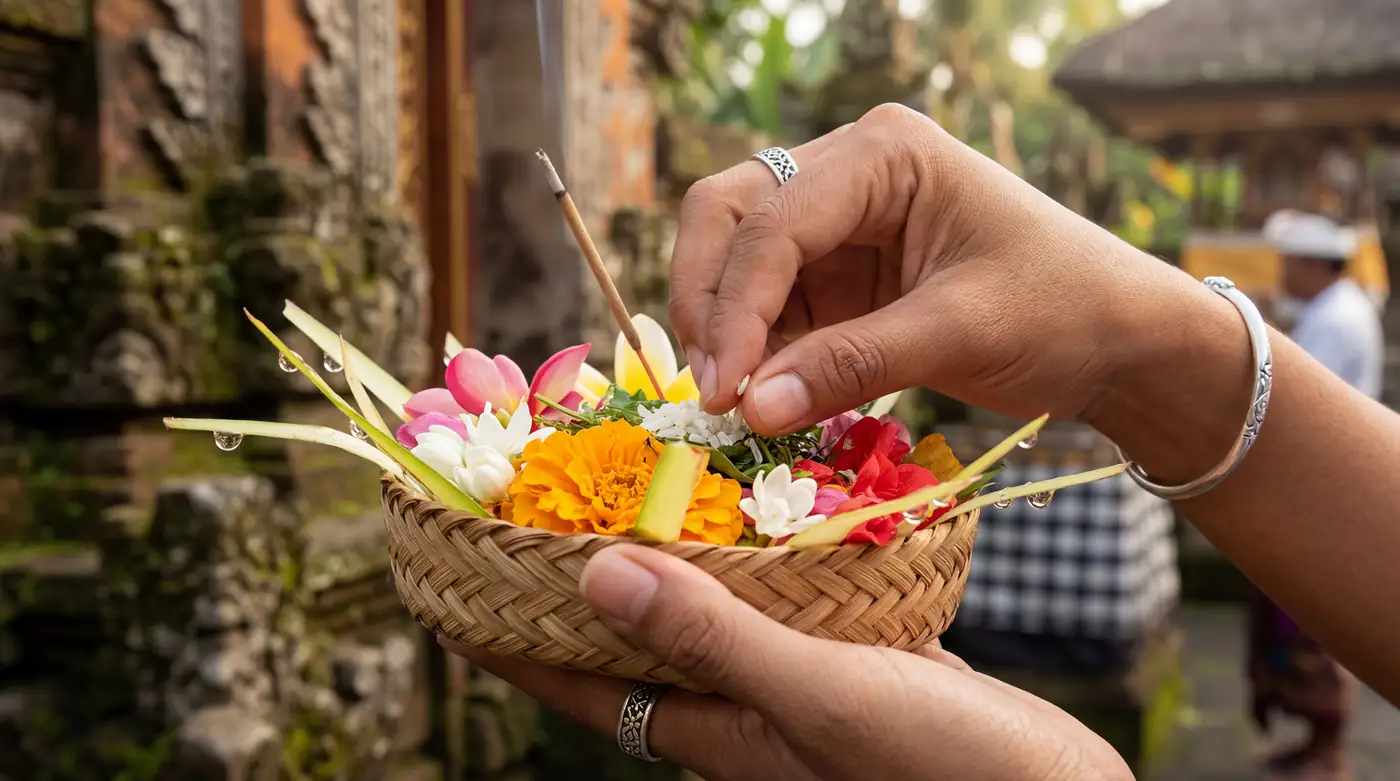
Canang sari are small trays woven from palm leaf, filled with flowers, a little food and often an incense stick. Balinese Hindus place them every day at shrines, doorways, shops and even on the pavement, as an offering of thanks.
Walk around offerings rather than over them, and do not move or pick them up. If you accidentally step on one, don't worry; simply be more careful afterwards.
What to wear to a temple
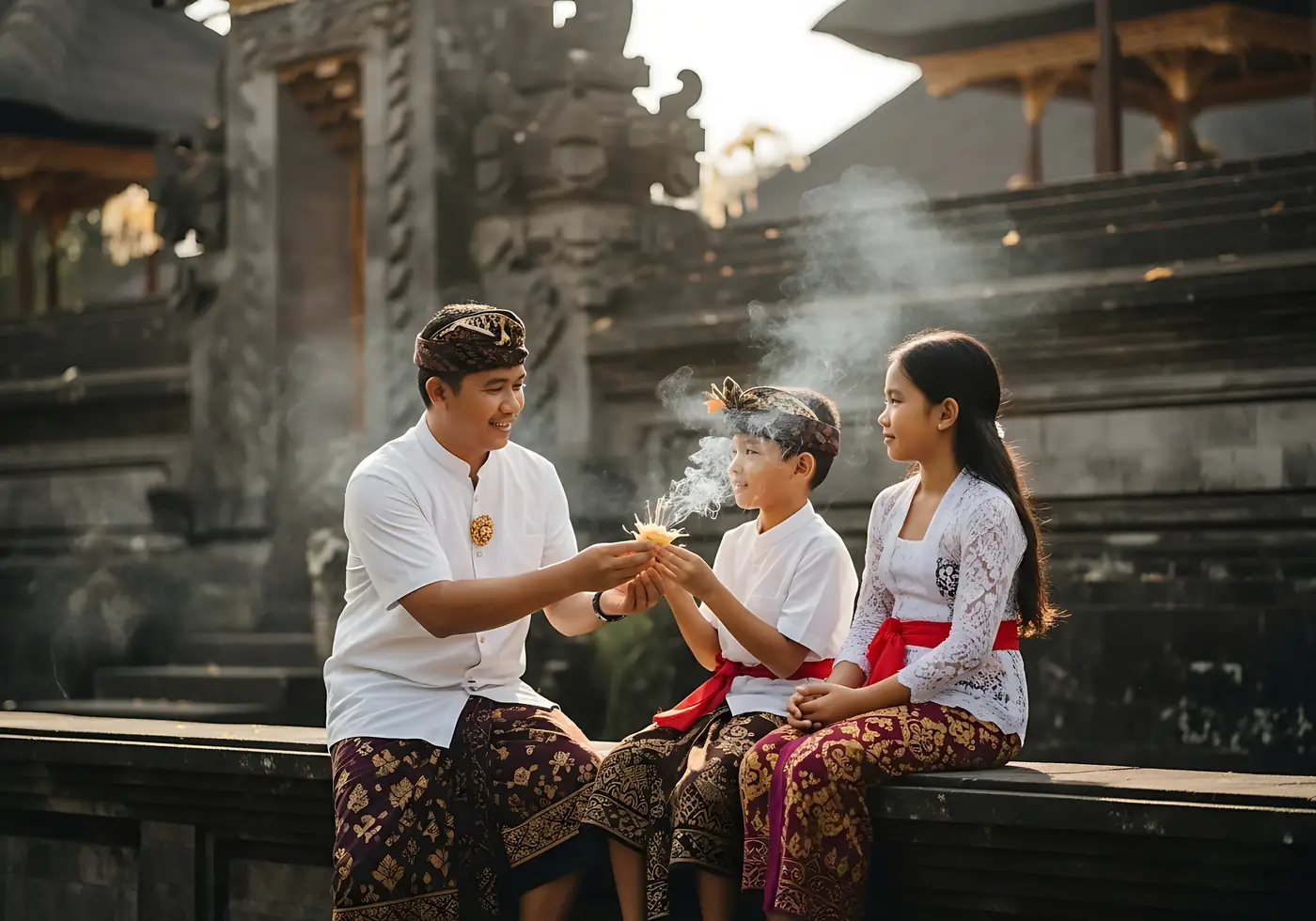
Men and women both wear a sarong and a sash around the waist when entering a temple, with shoulders covered. Many temples lend or rent sarongs at the entrance, but bringing your own is easy and inexpensive.
Clean, modest clothes are best on any day you plan to visit temples or ceremonies.
Inside the temple
Some inner courtyards are reserved for worshippers, so follow signs and the guidance of temple staff. Do not climb on shrines or walls, keep your voice low, and avoid sitting or standing higher than a priest or the offerings.
By Balinese custom, women who are menstruating are asked not to enter temples, and many temples display this at the entrance.
Ceremonies and processions
Processions are common in Sanur, especially on holy days. Traffic stops for them, so be patient, give way, and never walk through the middle of a procession.
Photos are usually fine from a respectful distance and without flash. Ask before photographing people at prayer, and put the camera down during the most solemn moments.
Everyday customs
Give and receive things with your right hand or both hands. The head is considered sacred, so avoid touching anyone's head, even a child's. Feet are the lowest part of the body, so keep them off tables and chairs and avoid pointing them at people or shrines.
Pura Blanjong in Sanur
In the south of Sanur, Pura Blanjong temple houses the Blanjong pillar, an inscription dated 914 CE and made by order of King Sri Kesari Warmadewa. Written in Sanskrit and Old Balinese, it is the first known Balinese inscription to record a king's name, which makes this quiet corner of Sanur one of the most important historical sites in Bali.
Visit respectfully, in a sarong and sash, and remember that it is an active temple.
Busy ceremony days
Galungan and Kuningan, which come round every 210 days, bring tall decorated bamboo poles called penjor to every street, and extra offerings appear at the full moon (purnama) and the new moon (tilem). They are beautiful days to be in Sanur; just expect more processions and plan a little extra travel time.
Customs can vary between temples and villages. When in doubt, ask temple staff or a local guide.
Frequently asked questions
Do I need a sarong to visit a temple in Bali?
Yes. Men and women wear a sarong and sash with shoulders covered. Many temples lend or rent them at the entrance.
Is it rude to step on an offering?
Try to walk around offerings rather than over them, and do not move them. If it happens by accident, don't worry.
Can I take photos of a ceremony?
Usually yes, from a respectful distance and without flash. Ask before photographing people at prayer.
Can I visit Pura Blanjong in Sanur?
Yes. Dress respectfully in a sarong and sash and remember it is an active temple.
More Sanur guides




More treatments
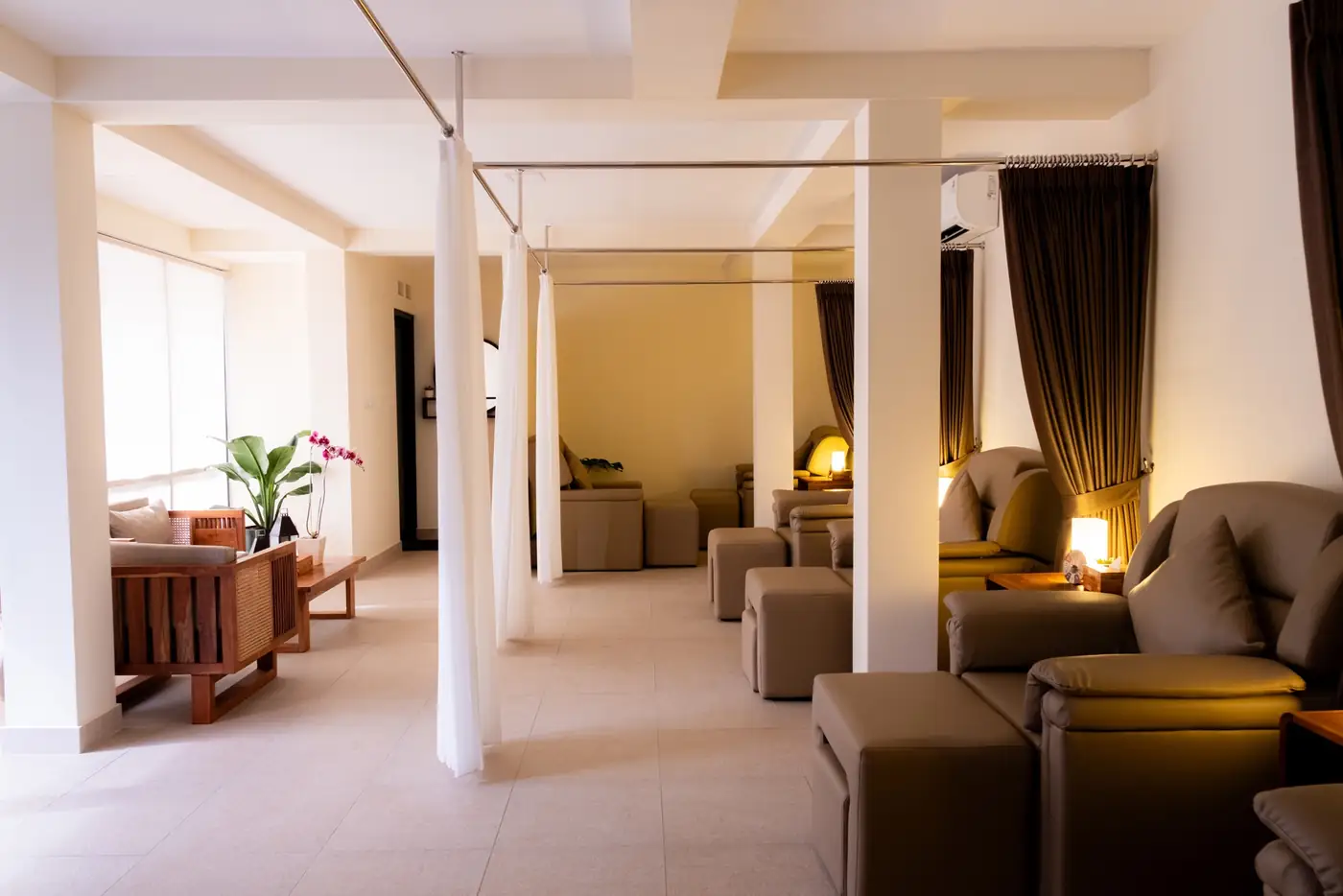
Find us in Sanur
Jalan Batur Sari No. 61A, Sanur, Denpasar Selatan, Bali
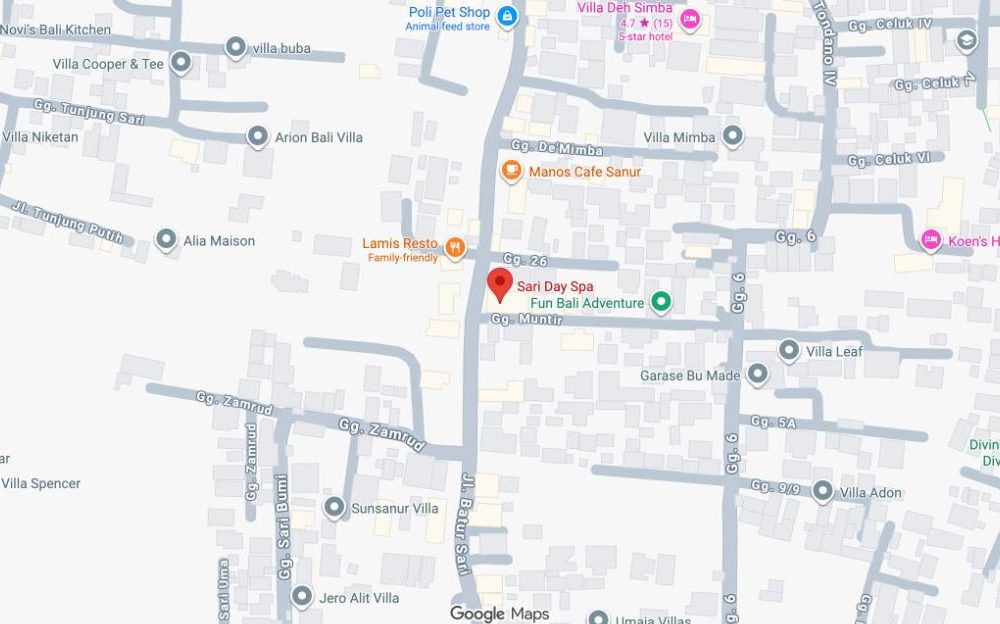 Get directions on Google Maps →
Open daily 9AM–9PM · last appointment 7:30PM